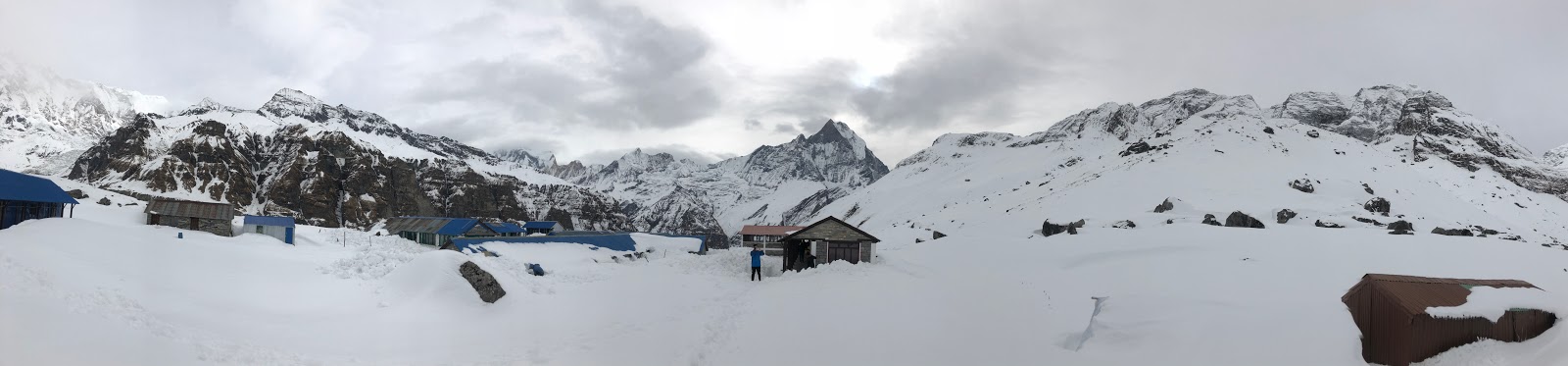
High Altitude Breathing
Why Nasal Breathing is essential at High Altitude: Scientific explanation
High-Altitude (HA) environments (typically >2,500 m / 8,200 ft) present one of the most dramatic physiological challenges humans can face. Oxygen availability drops, air temperature decreases, and humidity plummets—all of which put immense stress on the respiratory system. While many hikers and climbers focus on gear, acclimatization plans, or hydration, a fundamental but often overlooked factor plays a major role in altitude adaptation and successful summits or HA treks.
How you breathe—specifically, breathing through the nose instead of the mouth.
Here we explain the scientific reasons why nasal breathing matters even more at high altitude, and we break down the physics of the pressure gradients that make breathing possible in the first place.
The High-Altitude Environment: What Changes?
The Key Issue: Reduced Barometric Pressure
At sea level:
- Barometric pressure ≈ 760 mmHg
- Oxygen fraction (21%) → PO₂ ≈ 160 mmHg
At 3,500 m:
- Barometric pressure ≈ 495 mmHg
- PO₂ drops proportionally → 104 mmHg
At 5,500 m (Everest Base Camp region):
- Barometric pressure ≈ 380 mmHg
- PO₂ ≈ 80 mmHg
The oxygen percentage remains the same (21%), but pressure drops drastically, so fewer oxygen molecules enter your lungs per breath. Due to lower atmospheric pressure, entropy in the space increases and molecules are more dispersed.
Physics of breathing: Pressure gradient
Breathing is driven by pressure gradients created by the diaphragm and chest wall.
Inhalation Physics
- Diaphragm contracts → thoracic volume increases.
- Lung pressure (intrapulmonary pressure) drops slightly below outside air pressure.
- Air moves from higher pressure → lower pressure.
Typical pressure gradient needed for inhalation:
- 2–3 mmHg difference at sea level.
At High Altitude
Because the ambient pressure is lower, the pressure gradient becomes smaller, meaning each breath moves fewer molecules of oxygen.
Even when the pressure difference between lungs and atmosphere stays similar, the absolute number of O₂ molecules entering is reduced.
Thus the body compensates by:
- Increasing breathing rate (hyperventilation)
- Increasing tidal volume (deeper breaths)
But how you breathe affects how efficiently you use this reduced oxygen supply.
Why Nasal breathing matters more at HA
Nasal breathing improves Oxygen uptake efficiency
Airflow through the nose is slower, smoother, and more laminar than mouth breathing.
Laminar airflow:
- Increases residence time of air in nasal passages
- Allows better warming, humidifying, filtering
- Enhances nitric oxide uptake (see below)
Slower airflow means better alveolar gas exchange, which is vital in a low-pressure environment where oxygen transfer is limited.
Nitric Oxide (NO): The Secret weapon of nasal breathing
The nasal cavity produces nitric oxide (NO)—a gas that acts as a natural vasodilator.
When inhaled through the nose, NO:
- Dilates pulmonary blood vessels
- Improves ventilation–perfusion matching
- Increases oxygen transfer efficiency
This is especially valuable at altitude where:
- Pulmonary arteries constrict (hypoxic pulmonary vasoconstriction)
- Risk of pulmonary hypertension increases
- Efficient O₂ diffusion becomes critical
Studies show nasal breathing can increase oxygen uptake by 10–20% compared to mouth breathing during low-oxygen conditions.
Better humidification and warming prevents respiratory water loss
High-altitude air is:
- Extremely dry (humidity can drop below 20%)
- Extremely cold
Nose breathing:
- Humidifies air to near 100% relative humidity
- Warms air to ~37°C
- Prevents bronchial irritation
- Reduces water loss (critical for acclimatization)
Mouth breathing:
- Causes rapid dehydration
- Irritates bronchi
- Accelerates heat loss
- Increases respiratory rate (inefficient hyperventilation)
Water loss at altitude directly contributes to:
- Headaches
- AMS (Acute Mountain Sickness)
- Fatigue and performance decline
Thus, nasal breathing indirectly reduces AMS risk.
Filtration: Protecting the airways in harsh environments
The nose filters:
- Dust
- Cold particulates
- Microorganisms
- Ice crystals in extremely cold air
At altitude where airborne dust is common (e.g., Himalayas, Andes), nasal filtration protects lung function.
Maintains optimal diaphragmatic breathing mechanics
Mouth breathing often leads to:
- Shallow chest breathing
- Increased sympathetic (fight-or-flight) activation
- Reduced tidal volume
- Reduced oxygenation of muscle tissues
Nose breathing promotes:
- Diaphragmatic breathing
- More stable pressure gradients
- Better CO₂ tolerance
- Better Oxygenation of Muscles
At altitude, controlling CO₂ is critical because CO₂—not oxygen—drives respiratory rate.
Better CO₂ management → more efficient ventilatory response → improved acclimatization.
Pressure gradients and the nose: Why nose creates better conditions for Gas Exchange
The Nasal Valve Effect
The nasal airway naturally creates slight resistance—this is beneficial.
This resistance:
- Stabilizes airflow
- Helps maintain positive airway pressure
- Keeps alveoli (air sacs) open for better O₂ diffusion
In physics terms:
A slightly higher resistive pressure during inhalation improves alveolar recruitment, increasing surface area for gas exchange.
In contrast, the “open gate” of mouth breathing creates:
- Turbulent airflow
- Rapid pressure fluctuations
- Less efficient alveolar expansion
The Bernoulli effect and Laminar flow
Nasal passage geometry optimizes airflow via:
- Narrowing → increases air velocity
- Turbinates → create turbulence for mixing but maintain laminar segments for efficient warming & filtering
This design uses fluid dynamics to:
- Ensure even distribution of air into smaller bronchi
- Prevent dead-space ventilation
- Improve oxygen diffusion efficiency
High altitude magnifies the importance of efficient oxygen diffusion.
Practical Outcomes: Why climbers benefit from Nasal Breathing
Nasal breathing at altitude leads to:
- Improved oxygen saturation (higher SpO₂)
- Reduced dehydration
- Lower risk of AMS
- Better sleep quality (reduced periodic breathing)
- Improved endurance by stabilizing CO₂ and respiratory rate
- More efficient acclimatization physiology
Experienced mountaineers often report that nasal breathing significantly improves their performance on long alpine ascents.
Summary
| Benefit | Why It Matters at Altitude |
| Higher oxygen uptake | Nitric oxide + efficient airflow improve gas exchange |
| Reduced water loss | Prevents dehydration and AMS |
| Better filtration | Protects lungs from cold, dry, dusty air |
| Improved pressure gradients | Supports more effective alveolar expansion |
| Better CO₂ regulation | Helps control ventilation and acclimatization |
| Enhanced endurance | Smoother breathing = more stable oxygenation |
Conclusion
Breathing may seem automatic, but the way you breathe becomes a critical survival and success factor at high altitude. Nasal breathing is not just a comfort preference—it aligns with physics, respiratory physiology, vascular chemistry, and acclimatization science.
In an environment where every oxygen molecule counts, nasal breathing ensures you extract the maximum possible benefit from each breath.
Notes:
High Altitude offers other challenges to the physical, mental and emotional workings of humans and is not detailed in this article. This article is not intended as medical advice but a best practice.
Partial content and layout of the article has been done with assistance of online tools and is manually reviewed, edited and validated for accuracy of facts and fundamentals based on practical experience of the author.